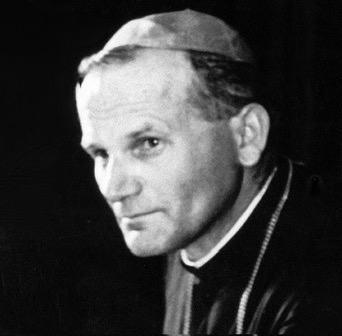
Given his role as a foundational influence for the Freedom and Responsibility Institute, it is essential to highlight how his academic and papal writings provided the philosophical framework for modern dignity. St. John Paul II (1920–2005) did not just preach about dignity; he codified it into a rigorous system of thought through encyclicals, which challenged unstable political power dynamics during the cold war and will continue to challenge political power for generations to come.[1]
Karol Wojtyła: The Personalist Revolution
Long before he became Pope, Karol Wojtyła lived through the dual horrors of Nazism and Communism. These experiences forced him to confront the Political Power Dynamics of systems that viewed the individual as a mere tool of the state. In response, he developed a philosophy known as “Personalism.”
In the framework of our book, Conflict: Recognizing Human Dignity as a Solution to Humanity’s Greatest Challenges, this is a critical Ideological Development. Personalism asserts that because of our innate characteristics—specifically our intellect and free will—the human person is a “subject” and never an “object” to be used for the self-interest of a system.[2]
The Encyclicals: Mapping the Dignity of the Person
As Pope, he used his encyclicals to provide clarity on how recognizing dignity provides healing to a world gripped by the Cycle of Conflict.
- Redemptor Hominis (1979): He declared that “man is the way for the Church,” arguing that human dignity is the primary lens through which all politics and economics must be viewed.
- Laborem Exercens (1981): He challenged Political Power Dynamics by asserting the “priority of labor over capital,” stating that systems must serve people.
- Veritatis Splendor (1993): A defense of responsible freedom, arguing that true freedom is the capacity to do what we ought based on objective truth.
- Evangelium Vitae (1995): He called for a “Culture of Life” where the intrinsic worth of the person is protected from conception to natural death.
Breaking the Cycle of Conflict through Truth
His message of “Be not afraid” served as a catalyst for the Solidarity movement—a non-violent effort that prioritized the welfare of the governed over the dominance of a single-party state. By focusing on public discourse and the responsible use of freedom, he helped create a “healthy conflict” that eventually led to the peaceful dismantling of the Iron Curtain.
This article is part of our Historical Figures series on the History of Human Dignity.
Verified Sources
-
- Vatican Archive. “Pope John Paul II: Encyclicals.” vatican.va. ↩
- Stanford University. “Personalism.” stanford.edu. ↩
Contribute to the Dialogue