
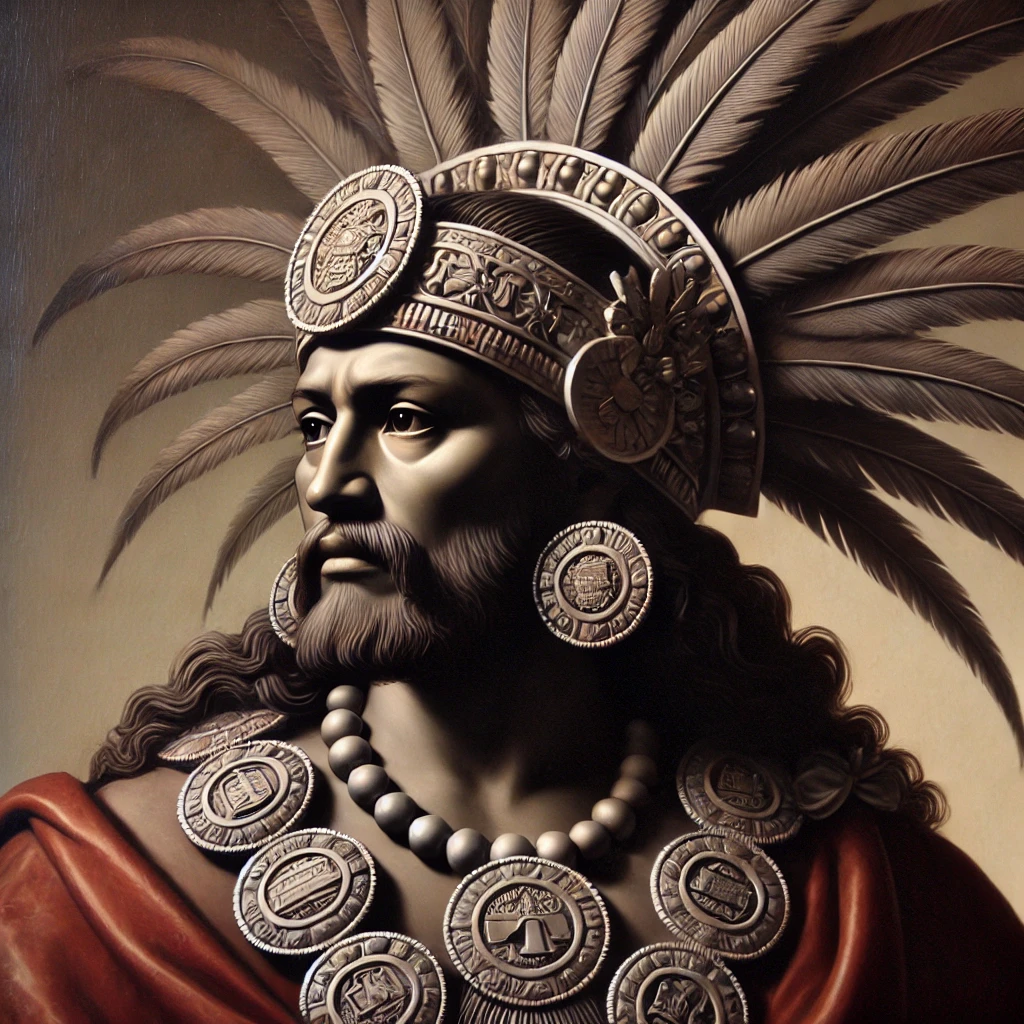
Nezahualcóyotl: Intellectual Sovereignty in the Flower and Song
In our book, Conflict: Recognizing Human Dignity as a Solution to Humanity’s Greatest Challenges, we explore how Ideological Developments can emerge in any corner of the globe to challenge the Law of Force. Nezahualcóyotl (1402–1472), the philosopher-king of Texcoco, is a profound example of this.[1] While the broader Political Power Dynamics of the Aztec Triple Alliance often leaned toward militarism, Nezahualcóyotl introduced a forward-thinking perspective that prioritized the intrinsic worth of the human person.
Intellectual Sovereignty and Moral Virtue
Nezahualcóyotl’s life began in the heart of a human-degrading conflict. After witnessing the murder of his father and spending years in exile, he used his independent agency and rational capacity to build a society based on intellect and moral virtues.[2] He transformed Texcoco into a cultural epicenter, establishing a renowned academy of music and arts.

In our book, we note that human dignity enables the achievement of complex goals. Nezahualcóyotl applied his intellect to create a legal code emphasizing fairness and the responsible use of freedom to protect the commoner from the self-interest of the nobility. His 80 laws established clear consequences for corruption, ensuring that the “Law of Virtue” applied even to the powerful.[3]
Challenging the Cycle of Conflict through Poetry
The Cycle of Conflict in the Valley of Mexico was often fueled by an ideology that demanded human sacrifice. Nezahualcóyotl pioneered a radical change by questioning these practices in his “Flower and Song” (In xochitl, in cuicatl) poetry. He searched for a foundational reason for respecting life, contemplating the temporary nature of our existence: “Not forever on earth, only a little while here.”[4]
Environmental Stewardship and the Public Good
Nezahualcóyotl’s vision extended to the physical world. He designed the Great Dike of Nezahualcóyotl to separate fresh and brackish waters, protecting the welfare of the governed from floods and ensuring agricultural stability. His legacy proves that the pursuit of flourishing is a universal human desire that transcends geography and time.
Sources
-
- UNAM (Estudios de Cultura Náhuatl). “Reexamining Nezahualcóyotl’s Texcoco: Politics, Conquests and Law.” nahuatl.historicas.unam.mx. ↩
- Cambridge University Press. “The Lords of Tetzcoco: Indigenous Leadership.” cambridge.org. ↩
- Offner, Jerome A. “Law and Politics in Aztec Texcoco.” loc.gov. ↩
- Project Gutenberg. “Ancient Nahuatl Poetry (Cantares Mexicanos).” gutenberg.org. ↩
Contribute to the Dialogue