
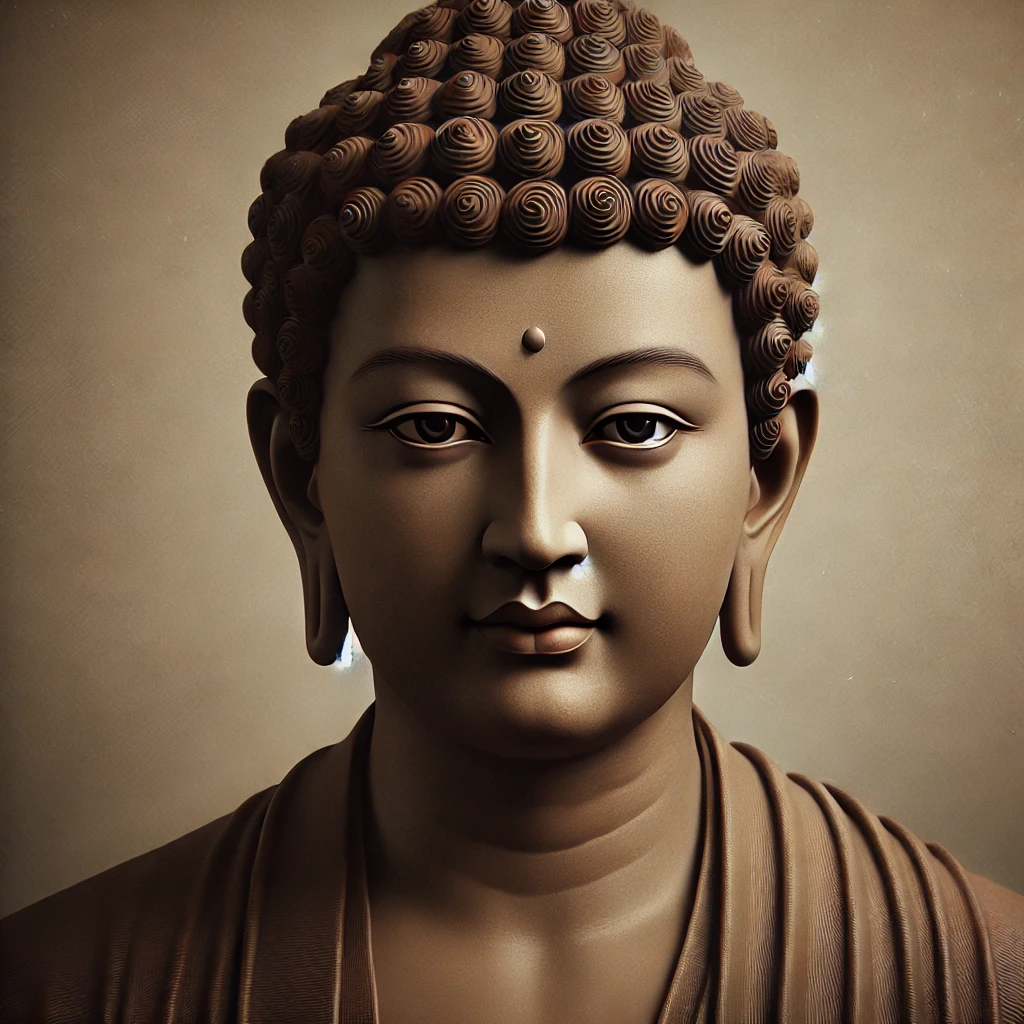
Buddha: The Axial Age and the Internal Revolution of Dignity
In the scope of human history, few periods have been as pivotal as the Axial Age (c. 800–200 BCE), a time when humanity began to move beyond tribalism and ritualism toward a deeper understanding of universal truth.[1] Amidst the rise of great empires and the inevitable “Human-Degrading Conflict” that accompanied them, a revolutionary Ideological Development emerged in the foothills of the Himalayas. Siddhartha Gautama, later known as the Buddha (c. 563 to 483 BCE)[2], introduced a philosophy that would fundamentally challenge the rigid Political Power Dynamics of his time.
At the Freedom and Responsibility Institute, we analyze how societies drift into the “Cycle of Conflict.” The Buddha’s era was no exception; it was a time of immense social stratification, where human value was often determined by the caste into which one was born. In this environment, dignity was conditional, granting power to the few while marginalizing the many. The Buddha disrupted this cycle by proposing a radical new concept: Internal Sovereignty.
Breaking the Chains of Determinism
The Buddha’s teachings rejected the deterministic view that a person’s worth was fixed by birth or fate. Instead, he argued that every individual possesses the independent agency to shape their own destiny through their actions (Karma) and their mind (Mindfulness).[3] This was a foundational moment for human dignity. By democratizing the potential for enlightenment, the Buddha suggested that every human being—regardless of social standing—possesses the rational capacity to break free from suffering.
This shift in Ideological Development was not merely spiritual; it had profound social implications. It challenged the “in-group” bias of the caste system, proposing instead that the “fabric of humanity” is woven together by shared experiences of suffering and the potential for liberation.
Compassion as a Counter to Human-Degrading Conflict
One of the most significant aspects of the Buddha’s legacy is the concept of Ahimsa (non-violence) and Karuna (compassion). In our analysis of the Cycle of Conflict, we see that violence often stems from “out-group” hostility—the perception that another group is a threat to one’s survival or values.[4] The Buddha diagnosed the root of this hostility as Avidya (ignorance) and attachment.
When we view others through the lens of greed or hatred, we engage in behavior that erodes human dignity. The Buddha’s “Eightfold Path” offers a practical framework for interrupting this cycle. By exercising responsible freedom—controlling one’s impulses and cultivating right action—an individual can stop the transmission of pain. This teaches us that true freedom is not the license to conquer others, but the discipline to conquer oneself.
From Ideology to Political Reality: The Legacy of Ashoka
The power of the Buddha’s ideology is perhaps best visible in its impact on Political Power Dynamics centuries later. Emperor Ashoka of the Mauryan Empire, after witnessing the devastation of the Kalinga War, turned to the Buddha’s teachings to halt the cycle of violence. Ashoka’s conversion demonstrates how a “Human-Degrading Conflict” can be transformed when a leader embraces an ideology rooted in dignity.
Ashoka’s edicts, carved into stone pillars across his empire, replaced the law of force with the law of Dhamma (moral righteousness). He proved that political power, when guided by a respect for inherent human worth, can create stability without oppression.[5]
Conclusion
The Buddha paved a path before us that emphasizes Independent Agency as the prerequisite for peace. His life reminds us that the solution to humanity’s greatest challenges lies not in external domination, but in the internal revolution of the mind. By recognizing the inherent value in all beings, we can interrupt the cycles of conflict that threaten our world today and move toward a future defined by responsibility and dignity.
Learn more about these concepts in our book, Conflict: Recognizing Human Dignity as a Solution to Humanity’s Greatest Challenges.
This article is part of our Historical Figures series on the History of Human Dignity.
Sources
-
- Metropolitan Museum of Art. “The Axial Age: 800–200 B.C.” metmuseum.org. ↩
- Stanford Encyclopedia of Philosophy. “The Buddha: Historical and Philosophical Context.” plato.stanford.edu. ↩
- World History Encyclopedia. “The Life and Teachings of the Buddha.” worldhistory.org. ↩
- Britannica. “Ahimsa: Nonviolence in Indian Philosophy.” britannica.com. ↩
- Britannica. “Ashoka: Mauryan Emperor.” britannica.com. ↩
Contribute to the Dialogue