Not all conflict is bad. Many aspects of conflict spur creativity and create a demand for institutional processes that preserve truth, legitimacy, and accountability in an increasingly complex environment.
Conflict becomes Human-Degrading when human dignity is no longer recognized by bystanders of harm or injustice. But how does that recognition fade? Is it the result of conscious decisions, or does dignity erode more subtly as societies become absorbed in rapidly advancing technology and increasingly unstable political power dynamics? And perhaps most importantly – can this cycle be interrupted?
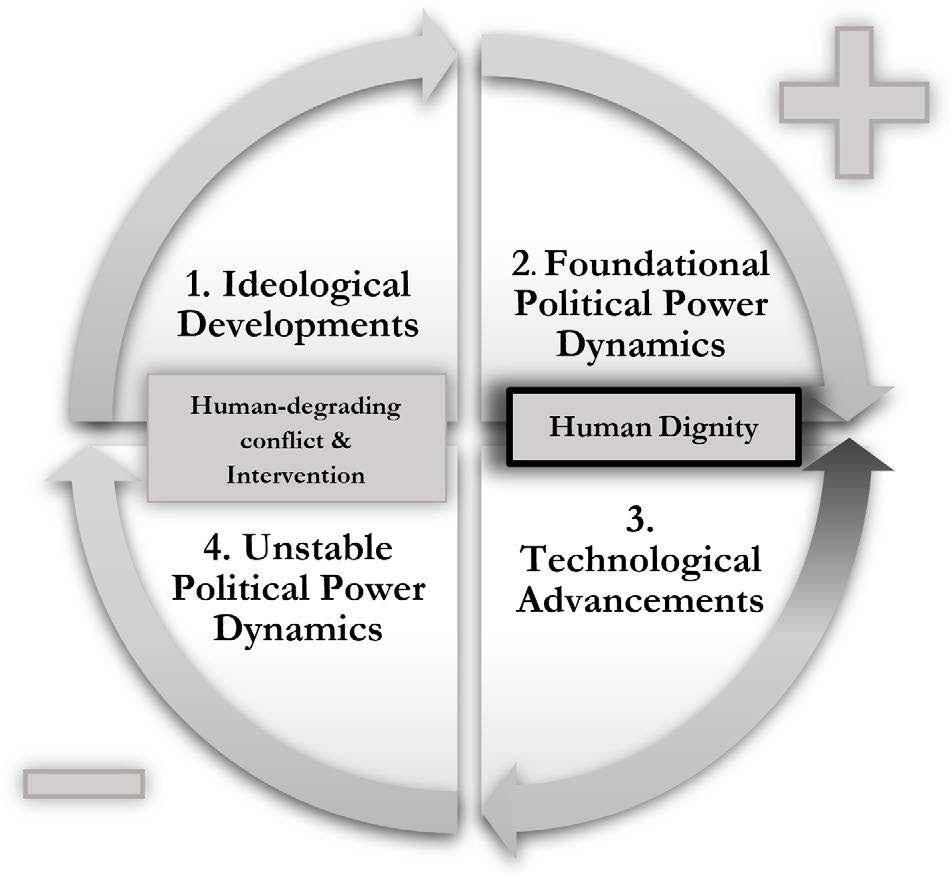
In our book, Conflict: Recognizing Human Dignity as a Solution to Humanity’s Greatest Challenges, we explore these questions through a historical lens. Our analysis led to the development of what we call the Cycle of Conflict – a framework designed to help us understand not only what draws societies toward protecting human dignity, but also how they drift into Human-Degrading Conflict.
When an out-group is perceived as a threat to in-group values or survival, groups predictably seek ways to protect themselves. Throughout history, this instinct for survival has often driven technological advancement. Such advancements challenge ideologies and often create division among groups.
When technological progress is guided primarily by in-group bias rather than a concern for humanity as a whole, it can amplify political instability. Left unchecked, these unstable power dynamics create conditions in which human dignity is diminished – and Human-Degrading Conflict emerges.
Contribute to the Dialogue